The Veilwardens
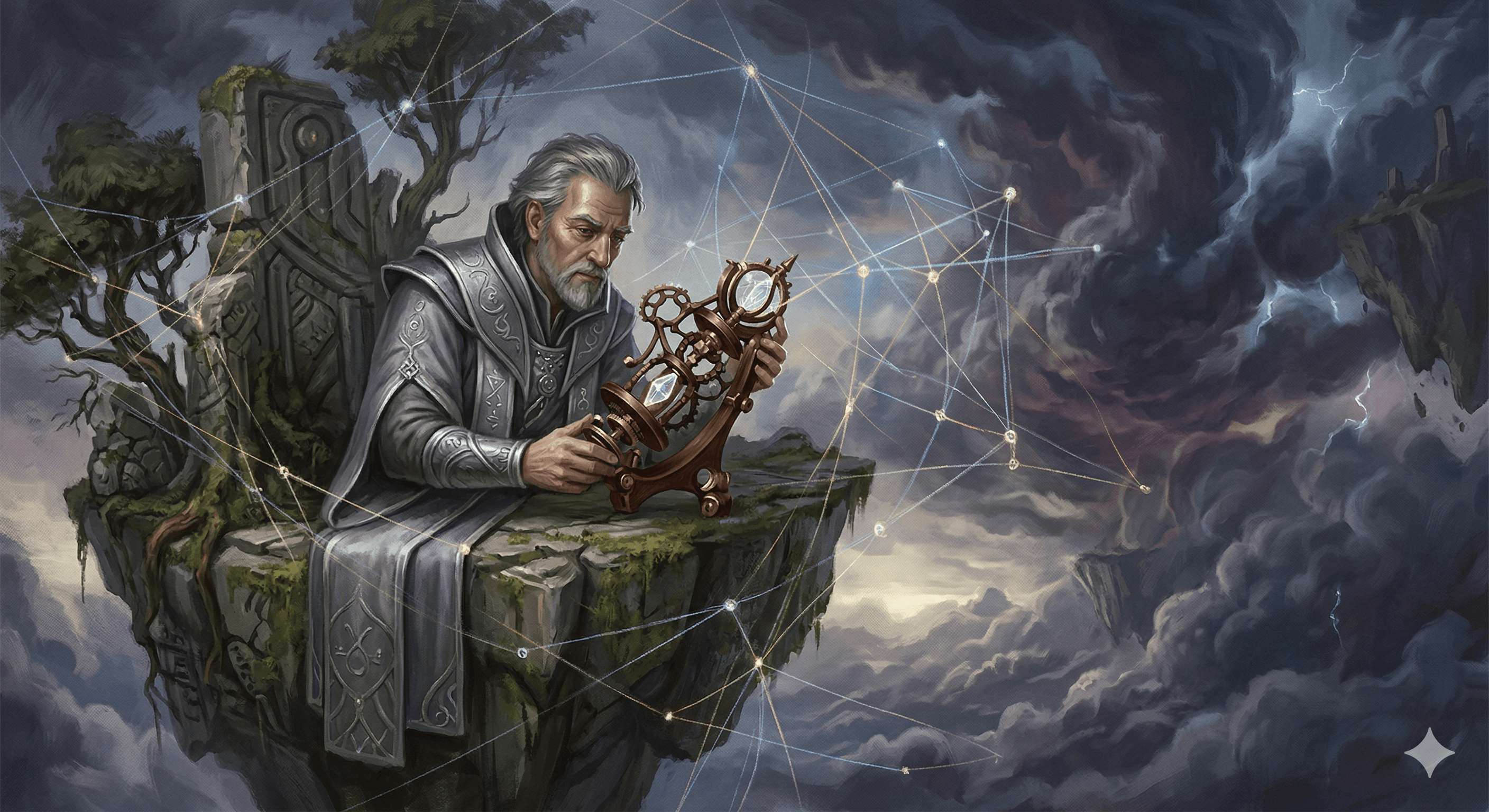
"We do not study the Weave. We tend it. The difference is the difference between a doctor and a collector." — Grandwarden Thessaly Orin, First Address to the Collegium
The Veilwardens are an ancient order of magical scholars and practitioners whose purpose is the monitoring, protection, and where possible, repair of The Weave — the magical fabric of Aethermoor. They predate The Sundering by nearly two centuries, founded originally as a regulatory body of The Irenian Empire. They survived the Sundering, reconstituted themselves on the floating islands, and have been the primary institutional counterweight to The Iron Compact's magical exploitation ever since.
They are right about most things. They are also frequently insufferable about it.
Origins
The Veilwardens were established in the mid-Imperial period as the Bureau of Weave Integrity — a dry, administrative body tasked with licensing magical practitioners, monitoring ley-line use, and adjudicating disputes between mages. They were bureaucrats, not adventurers.
Empress Sylara Voss's reforms elevated them significantly: she gave them investigative powers, legal standing to shut down magical operations, and a formal separation from the Treasury (which had previously been their oversight). This was in part a response to early warnings about dangerous magical experimentation — warnings that, in the most famous failure of institutional judgment in history, they did not apply to The Heartstone project until it was too late.
The survivors of the Sundering reconstituted the Bureau as the Veilwardens — a name reflecting the shift in self-conception from administrators to guardians. The founder of the reconstituted order, Warden Thessaly Orin, wrote the Veilwarden Oath that every member still takes:
I swear to tend the Weave as a living thing, to study it without exploiting it, to warn without flinching, and never to repeat the sin of the Architect.
Structure
The Veilwardens are organized around the Collegium on the Spire Platform, which serves as their headquarters, primary research institution, and archive. Below the Collegium level:
- Grandwarden — head of the order, elected by senior Wardens for life
- Arcwardens — senior scholars responsible for specific areas of Weave research or geographic monitoring
- Field Wardens — the operational arm; they investigate Riftpocket incidents, pursue Heartstone shards, and maintain the monitoring network
- Initiates — students and probationary members
The current Grandwarden is Mira Solanthas, age seventy-one, who has held the position for eighteen years. She is considered brilliant and inflexible in roughly equal measure.
What They Know About the Weave
The Veilwardens maintain the most extensive dataset on Weave condition in Aethermoor, accumulated over five centuries. Their current assessment:
The situation is serious. The Weave's integrity across the sky-islands has declined measurably in every century since the Sundering. The rate of decline has been accelerating for approximately sixty years — coinciding with The Iron Compact's expansion of aetheric engine use.
Riftpockets are increasing in frequency and size. A Riftpocket is a zone of collapsed local Weave structure where magic behaves unpredictably or inversely. In the first century of the Floating Age, perhaps two or three were recorded per decade. Currently, a dozen per year appear across the cluster.
Heartstone shards are focal points of degradation. Each shard is a point where the Weave's original tear is, in effect, still open — a wound that doesn't close. The shards need to be gathered and either contained or used to repair the original tear at The Breach. The Veilwardens are pursuing this.
A complete Weave collapse would be catastrophic. Not just for magic-users. The aetheric buoyancy keeping the islands aloft is the Weave. If the Weave fails, the islands fall.
Relationship with Other Factions
The Iron Compact: The Veilwardens' primary institutional conflict. The Compact's aetheric engines are, in Veilwarden assessment, the biggest single driver of Weave degradation. The Compact has political power; the Veilwardens have moral authority and expertise. Neither has decisively won.
The Driftborn: An unexpected alliance. Driftborn sky-culture includes a tradition of Weave-sensitivity — reading magical weather, navigating Riftpockets, sensing changes in aetheric currents. Field Wardens and Driftborn scouts cooperate extensively, to the annoyance of both orders' traditionalists.
The Ashen Court: Complicated. The Ashen Court has access to pre-Sundering imperial archives that the Veilwardens desperately want. The Court has used this as leverage in various negotiations. The Veilwardens are aware that the Court's goals could be genuinely dangerous; they are not above working with dangerous people when the stakes are high enough.
The Valdris Protocols
In the Veilwarden Collegium's sealed archive, there exists a document called the Valdris Protocols — a contingency planning document for scenarios in which Valdris the Architect or an entity containing his consciousness is confirmed to be active in Aethermoor.
The Protocols exist. Their contents are not publicly known. The Grandwarden and the five senior Arcwardens have access.
The fact that the document was created at all tells you something about what the Veilwardens believe is possible.
The Veilwarden Oath
Recited at full induction, and on the first day of each year in Collegium assembly:
I swear to tend the Weave as a living thing. To study it without exploiting it. To warn without flinching, though the warning be unwelcome. To pursue the shards, guard the breach, and watch the sky. And never — never — to repeat the sin of the Architect.
Related Topics
- The Weave — what they protect
- The Spire of Echoes — their headquarters' most significant feature
- The Iron Compact — their primary antagonist
- The Heartstone — the shards they are hunting
- The Breach — the wound they are watching
- The Driftborn — their unlikely field partners
- Valdris the Architect — the cautionary figure at the center of their purpose
- The Irenian Empire — what they originally served
